


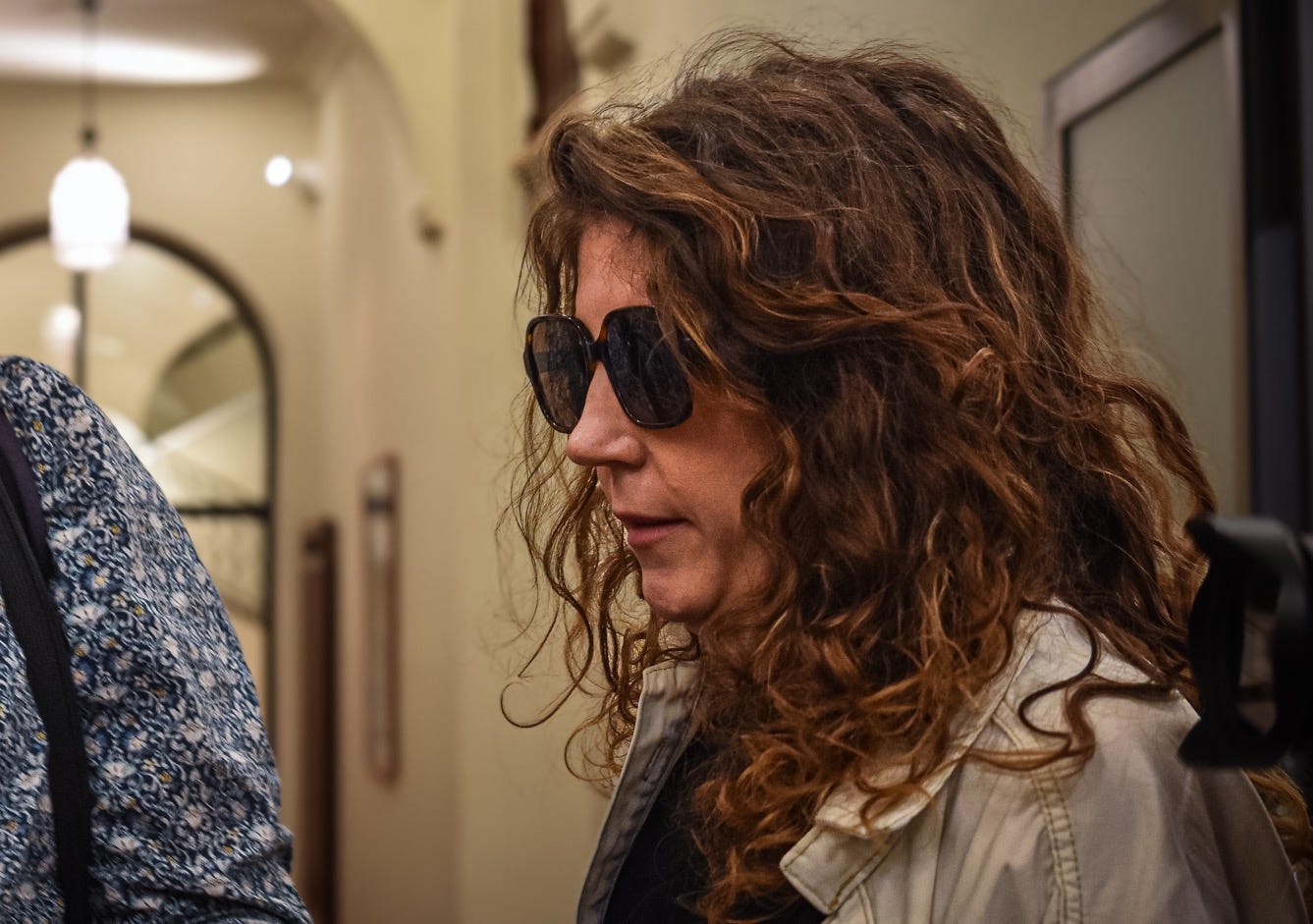
Pursuing a PhD in the United States – but silent about where
Helena Almqvist Hägglund (born 1983) is a Swedish far-left activist who was previously affiliated with Stockholm University, where she described her work as research focused on “social movements.” Since 2023, however, she has been pursuing a PhD in Middle Eastern studies at an American university. What is remarkable is not that she is studying abroad—but how consistently she avoids saying which institution it is.
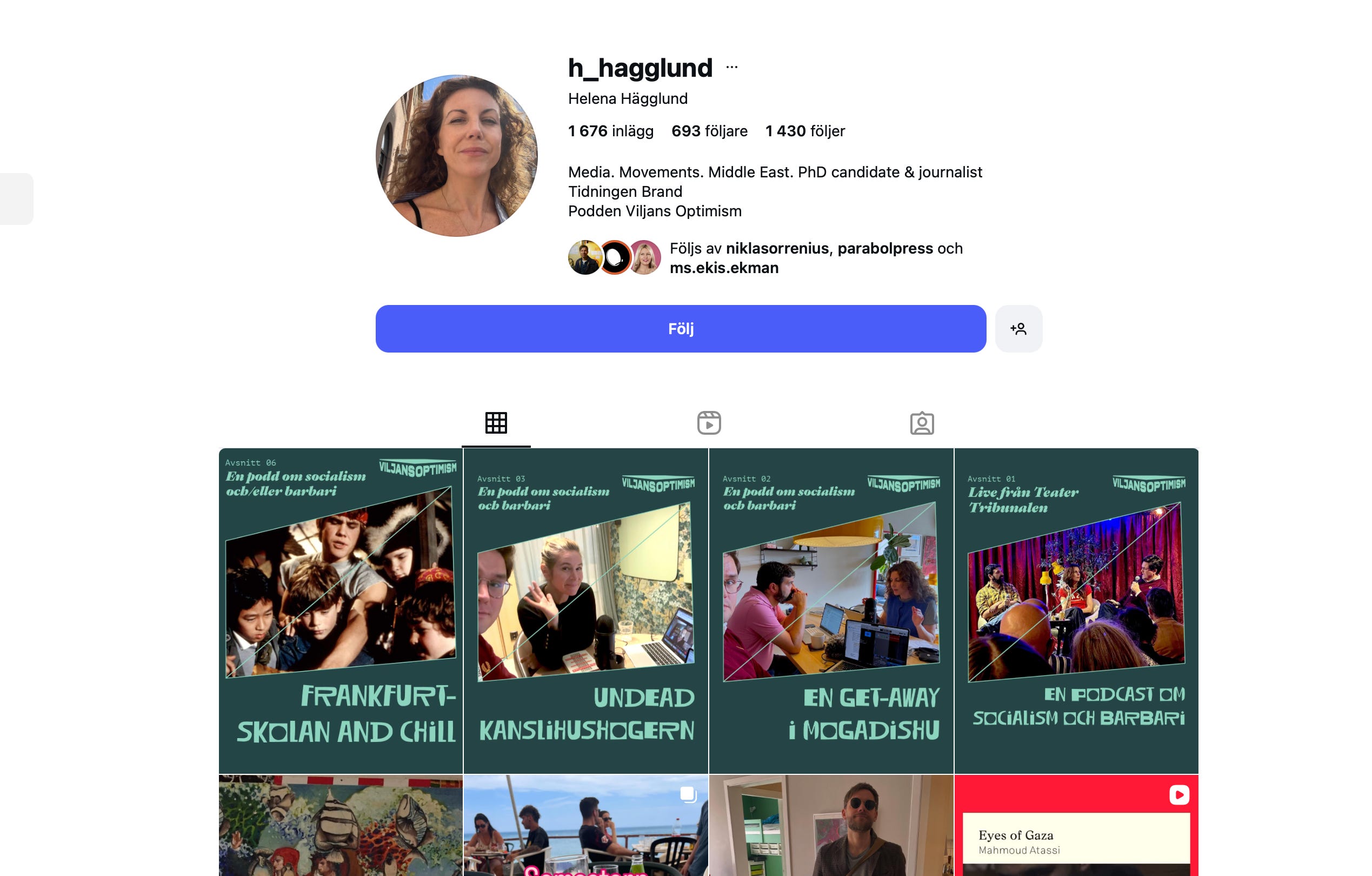
In her social media posts and in texts where she often mentions her studies, but she never states which university she attends. Not even when she appeared on a podcast and shared her reflections on the Palestine movement on campus did she name the institution. Instead, she spoke vaguely of “the university closest to me.”
Only through the University of Chicago’s own student portals do Hägglund’s name—and that of her husband, Adam Almqvist—appear as signatories on various student papers. Why this discretion? After Trump’s election victory, she further downplayed her time in the United States, including by taking down her account on X.
“Globalize the intifada” – when the mask fell
This Christmas, Hägglund shared a post by Swedish Antifa-founder Mathias Wåg with the text: “Merry Christmas and Global Intifada”, accompanied by watermelons, an alternative symbol for the Palestinian flag.

“Intifada” means uprising in Arabic, but in this context the term refers to the First (1987–1993) and Second (2000–2005) Intifadas in Israel—periods during which terrorist attacks against civilians were systematic, carried out by groups such as Hamas and Islamic Jihad. Suicide bombings targeting hotels, nightclubs, and bus stops claimed more than a thousand Israeli lives. To speak of “globalizing” this violence is therefore a call to spread terrorism.
Hägglund’s view of militant extremist groups became clear when she herself appeared on a podcast run by Mathias Wåg. There she described it as a possibly “overoptimistic” hope that American communist groups would begin weapons training in Palestine—similar to what the Black Panthers did in the 1960s.
Helena Hägglund: If I remember correctly, I think the Black Panthers were in Palestine and trained in “armed struggle".

Mathias Wåg: Kind of like all anti-imperialist groups.

Helena Hägglund: It’s incredible to think that it was like that once upon a time.

Mathias Wåg: Such an incredible international movement in struggle."

Helena Hägglund: But maybe that’s what’s happening now. Maybe that’s what’s happening now. I don’t know—it might be easy to be overly optimistic. But something big is happening in the U.S. right now.
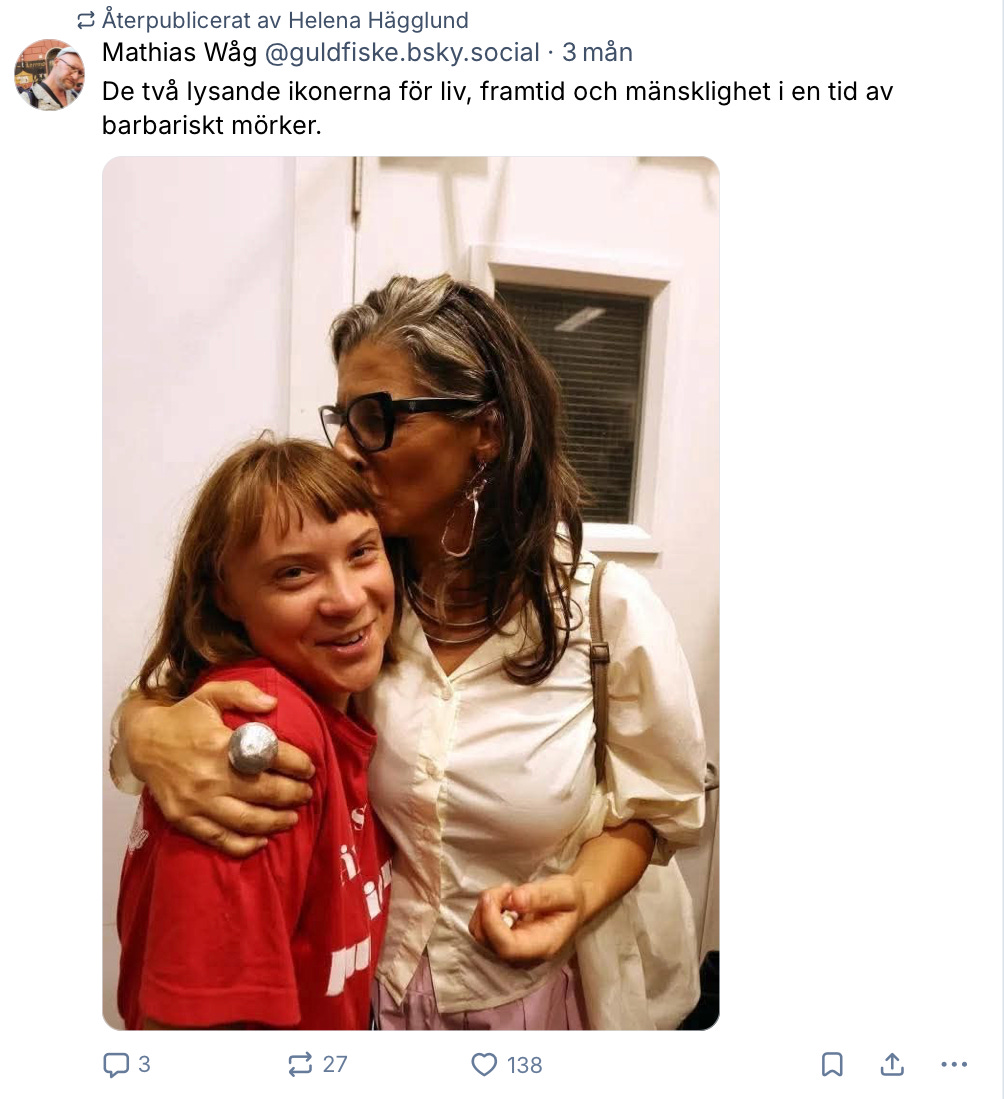
Another post shared by Hägglund shows an image of Greta Thunberg and Francesca Albanese, who were recently sanctioned by the United States for their activism against American interests and for spreading antisemitism. The caption read: “The two shining icons of life, future, and humanity in a time of barbaric darkness.”
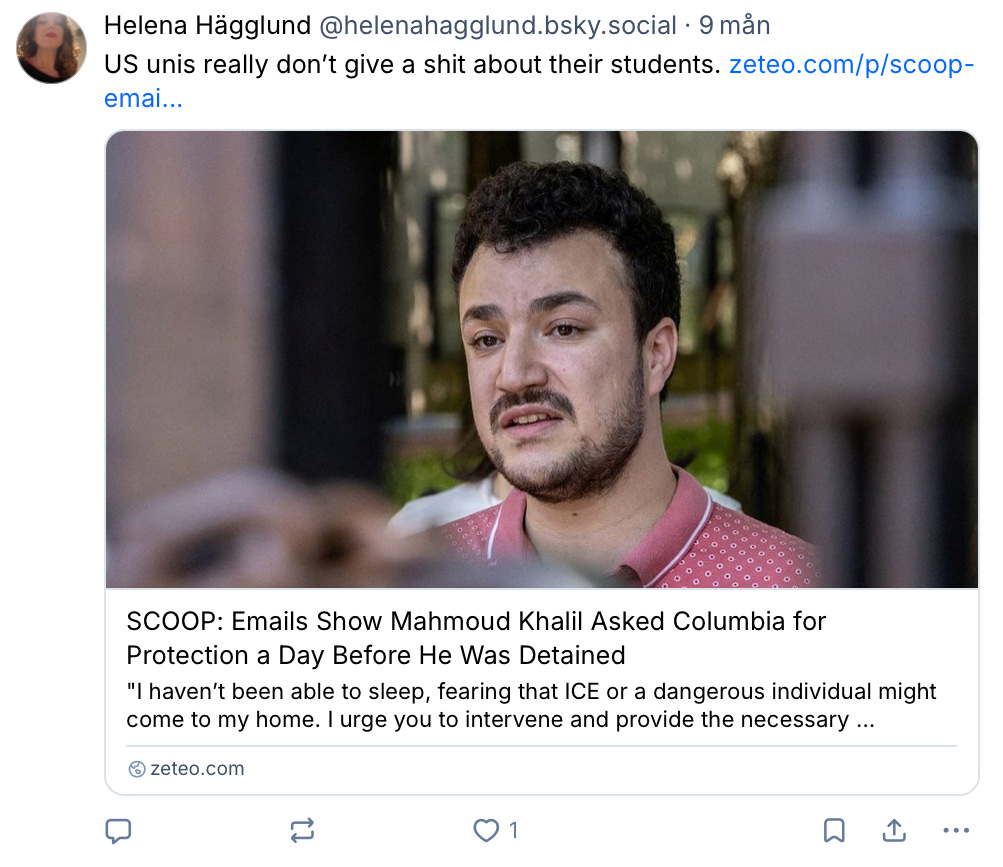
When Columbia University chose not to support the openly antisemitic terror supporter Mahmoud Khalil after the Trump administration announced plans to deport him, Hägglund reacted with the following words: “US unis really don’t really give a shit about their students.”
Editor of extremist propaganda magazine
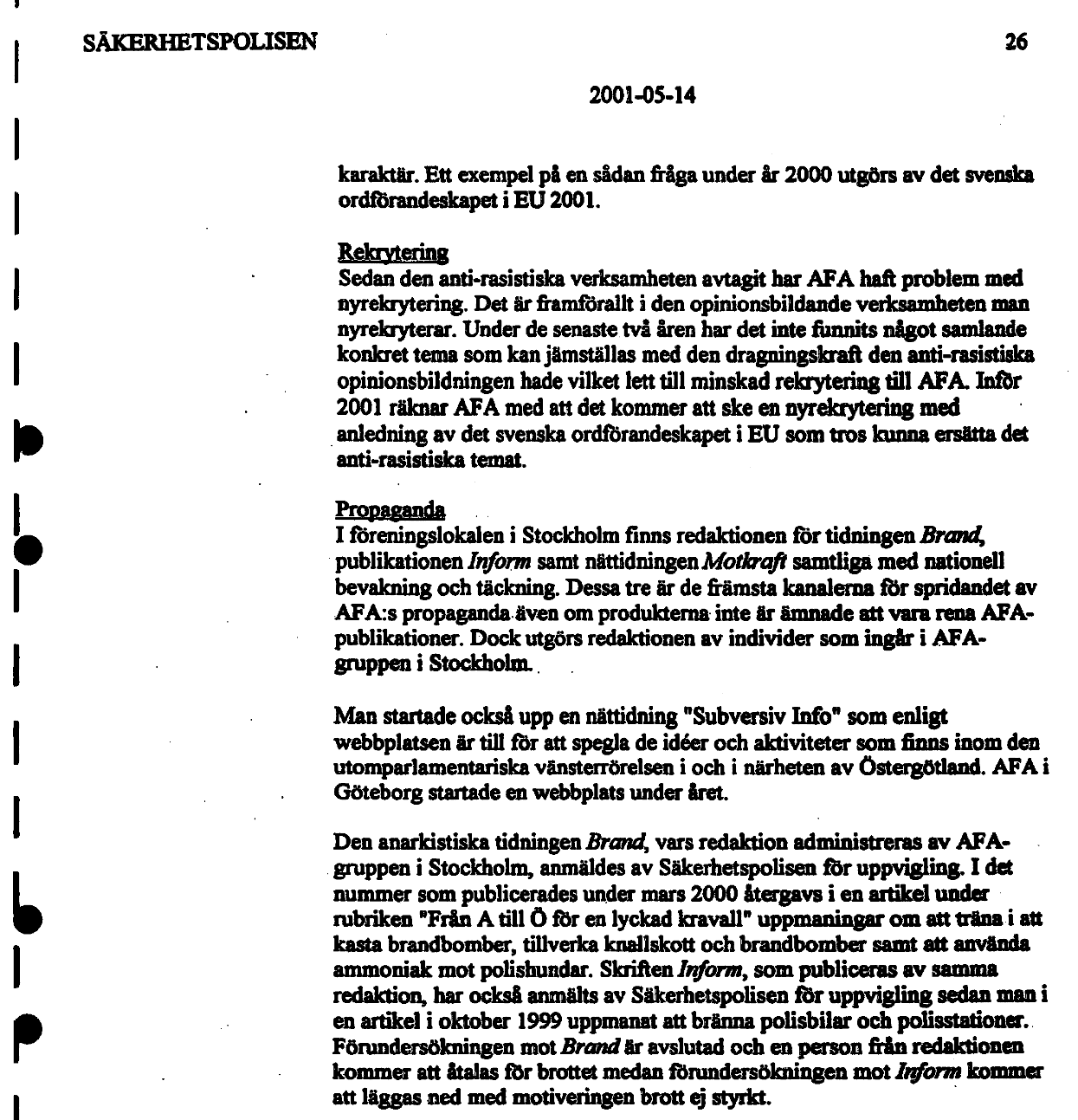
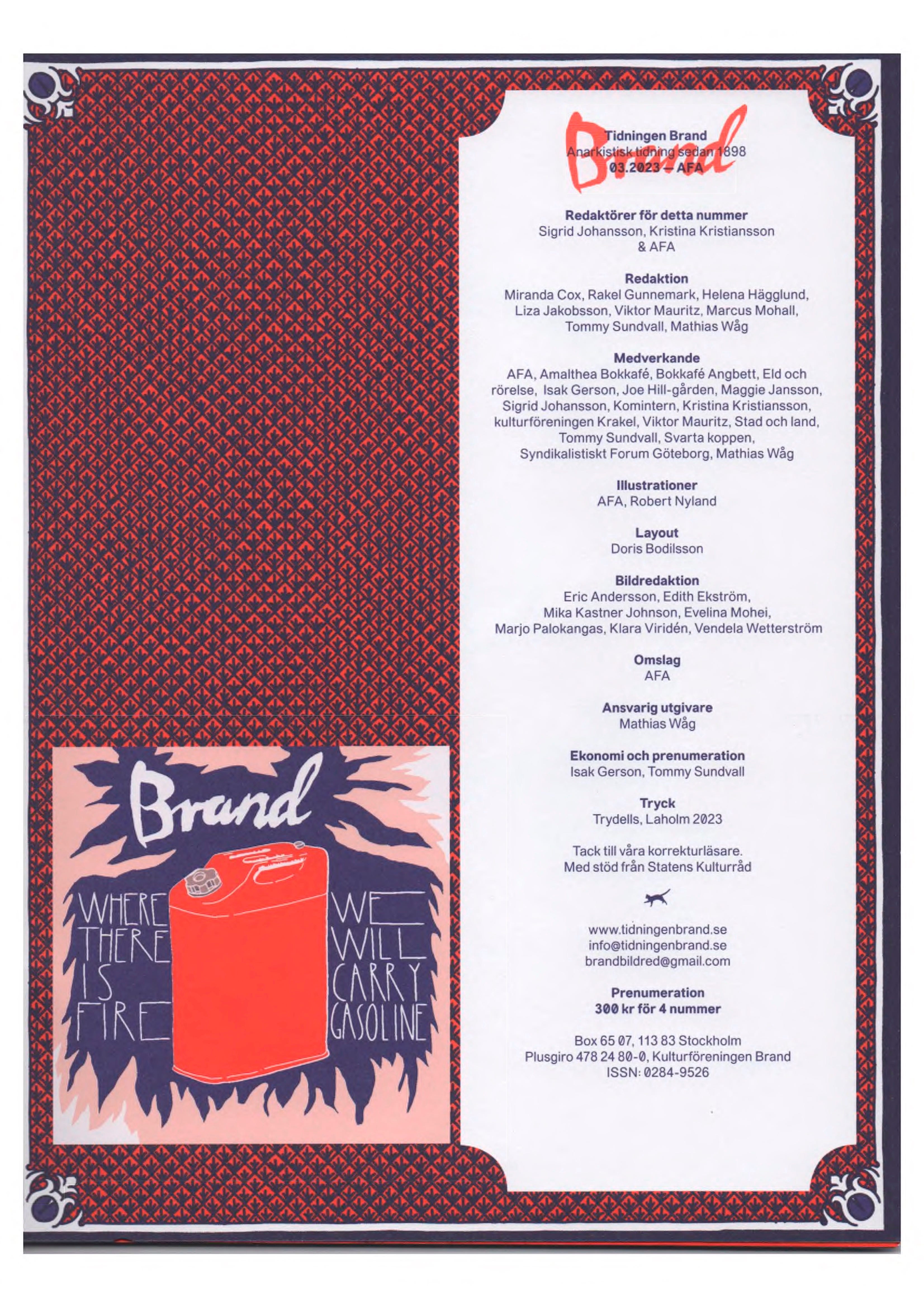
Alongside her studies at the University of Chicago, Helena Hägglund is an editor for the far-left magazine Brand. As early as the turn of the millennium, the editorial board was identified by the Swedish Security Service’s constitutional protection unit as the leadership of the Swedish branch of the global extremist network Antifa. In recent years, the magazine has in several issues both glorified and urged its readers to sabotage critical infrastructure.
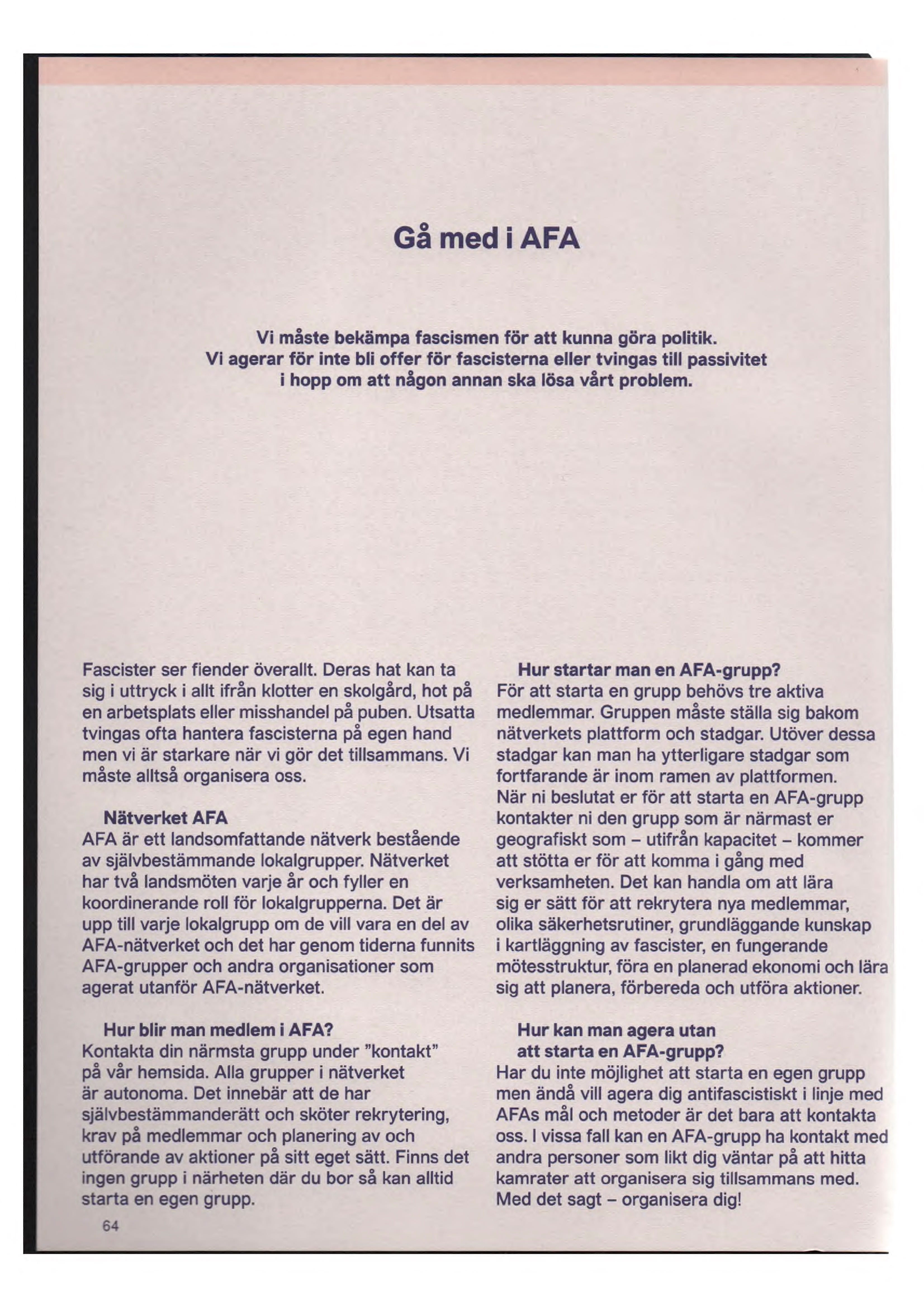
Under Hägglund’s editorship, Brand has also explicitly encouraged readers to join the Swedish branch of Antifa. In the same issue, violent crimes linked to the organization were openly described—not as cautionary examples, but as a source of inspiration for readers.
Close ties to founder of Antifa in Sweden
Hägglund’s involvement is not merely theoretical. She personally attended the defamation trial at the Stockholm District Court in which Antifa-founder Mathias Wåg was the defendant. There, she acted in an activist manner by blocking photographers who were attempting to report from the trial.


She was also present in court together with her friend Victoria Rixer, who runs a meeting venue in Skarpnäck dedicated to what she calls “political radicalism.” Rixer was also present inside Hvitfeldtska Upper Secondary School, which during the 2001 Gothenburg riots served as a base for the so-called “black bloc”—far-left extremists who later vandalized large parts of central Gothenburg in connection with George W. Bush’s visit to the city.
Wants to sabotage ICE
In addition to encouraging armed struggle against Jewish interests and engagement in the terrorist-designated Antifa milieu, Helena Hägglund has on several occasions expressed support for improper interference directed at employees of U.S. immigration authorities. In a post on Bluesky, she refers to disruptions targeting officials as a form of “neighborhood organizing.”

Can the Trump administration act?
It is unclear which visa Hägglund is using, but it is likely either an F-1 visa, the most common student visa, or a J-1 visa intended for academic exchanges. Both visa types can be revoked if the holder encourages or promotes terrorism.
Even without a court decision, the Department of Homeland Security or the Department of State can revoke the right to remain in the country and initiate deportation proceedings—in some cases resulting in a lifetime entry ban. Foreign nationals are not covered by the U.S. First Amendment in the same way as citizens; immigration law takes precedence.
Encouraging recruitment to Antifa’s Swedish cell—which in the United States is regarded as a terrorist organization—and explicitly praising “intifada” are therefore not trivial matters. The Trump administration has also announced that Hamas sympathizers will be prioritized for deportation from American universities.
A J-1 visa application can run to dozens of pages and often includes questions about political engagement, links to extremism, and prior criminal activity. Although these applications are not public records in the United States, several international students have been deported after providing false information.
Christian Peterson